


Friday, May 11, 2012

Famous Scientist ( Hannes Alfvén )
-: Hannes Alfvén :-
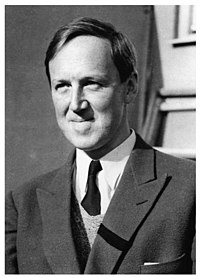 |
| Hannes Alfvén |
Hannes Olof Gösta Alfvén (born 30 May 1908 in Norrköping, Sweden; died 2
April 1995 in Djursholm, Sweden) was a Swedish electrical engineer,
plasma physicist and winner of the 1970 Nobel Prize in Physics for his
work on magnetohydrodynamics (MHD). He described the class of MHD waves
now known as Alfvén waves. He was originally trained as an electrical
power engineer and later moved to research and teaching in the fields of
plasma physics and electrical engineering. Alfvén made many
contributions to plasma physics, including theories describing the
behavior of aurorae, the Van Allen radiation belts, the effect of
magnetic storms on the Earth's magnetic field, the terrestrial
magnetosphere, and the dynamics of plasmas in the Milky Way galaxy.
Alfvén received his PhD from the University of Uppsala in 1934. His thesis was titled "Investigations of the Ultra-short Electromagnetic Waves."
In 1934, Alfvén taught physics at both the University of Uppsala and the Nobel Institute for Physics in Stockholm, Sweden. In 1940, he became professor of electromagnetic theory and electrical measurements at the Royal Institute of Technology in Stockholm. In 1945, he acquired the nonappointive position of Chair of Electronics. His title was changed to Chair of Plasma Physics in 1963. In 1954-1955, Alfvén was a Fulbright Scholar at the University of Maryland, College Park. In 1967, after leaving Sweden and spending time in the Soviet Union, he moved to the United States. Alfvén worked in the departments of electrical engineering at both the University of California, San Diego and the University of Southern California.
First and foremost, Alfvén considered himself an electrical engineer. Prior to winning the Nobel Prize, he was not generally recognized as a leading innovator in the scientific community.
The Hannes Alfvén Prize, awarded annually by the European Physical Society for outstanding contributions in plasma physics, is named after him.
Alfvén believed the problem with the Big Bang was that astrophysicists tried to extrapolate the origin of the universe from mathematical theories developed on the blackboard, rather than starting from known observable phenomena. He also considered the Big Bang to be a scientific myth devised to explain creation.
Alfvén and colleagues proposed the Alfvén-Klein model as an alternative cosmological theory to both the Big Bang and steady state theory cosmologies.
Alfvén was married for 67 years to his wife Kerstin. They raised five children, one boy and four girls. His son became a physician, while one daughter became a writer and another a lawyer in Sweden. The composer Hugo Alfvén was Hannes Alfvén's uncle.
Alfvén received his PhD from the University of Uppsala in 1934. His thesis was titled "Investigations of the Ultra-short Electromagnetic Waves."
In 1934, Alfvén taught physics at both the University of Uppsala and the Nobel Institute for Physics in Stockholm, Sweden. In 1940, he became professor of electromagnetic theory and electrical measurements at the Royal Institute of Technology in Stockholm. In 1945, he acquired the nonappointive position of Chair of Electronics. His title was changed to Chair of Plasma Physics in 1963. In 1954-1955, Alfvén was a Fulbright Scholar at the University of Maryland, College Park. In 1967, after leaving Sweden and spending time in the Soviet Union, he moved to the United States. Alfvén worked in the departments of electrical engineering at both the University of California, San Diego and the University of Southern California.
First and foremost, Alfvén considered himself an electrical engineer. Prior to winning the Nobel Prize, he was not generally recognized as a leading innovator in the scientific community.
The Hannes Alfvén Prize, awarded annually by the European Physical Society for outstanding contributions in plasma physics, is named after him.
Alfvén believed the problem with the Big Bang was that astrophysicists tried to extrapolate the origin of the universe from mathematical theories developed on the blackboard, rather than starting from known observable phenomena. He also considered the Big Bang to be a scientific myth devised to explain creation.
Alfvén and colleagues proposed the Alfvén-Klein model as an alternative cosmological theory to both the Big Bang and steady state theory cosmologies.
Alfvén was married for 67 years to his wife Kerstin. They raised five children, one boy and four girls. His son became a physician, while one daughter became a writer and another a lawyer in Sweden. The composer Hugo Alfvén was Hannes Alfvén's uncle.
Facebook announces App Center :-

Facebook put an important marker down today by announcing that it
intends to offer what it calls an "App Center" in coming weeks.
"For
the over 900 million people that use Facebook, the App Center will
become the new, central place to find great apps like Draw Something,
Pinterest, Spotify, Battle Pirates, Viddy, and Bubble Witch Saga,"
Facebook's Aaron Brady said in a blog post. "Everything has an app
detail page, which helps people see what makes an app unique and lets
them install it before going to an app."
Today's announcement was
what Facebook spokeswoman Malorie Lucich described as a call to
developers to submit images and copy so that their Facebook can consider
featuring their apps. She said Facebook's App Center is designed to
push the best social apps through a personalized discovery page.
If
you're a person who likes word games--something Facebook would know
from your Facebook behavior--the App Center will surface those sorts of
apps for you. Then, when you select an app you like, you'll be sent to
the Apple's App Store or Google's, depending on your device. "We're
certainly not looking at it any competitive way" with Google or Apple,
said Lucich.
Thursday, May 10, 2012
Famous Scientist ( Sven Gustaf Wingqvist )
-: Sven Gustaf Wingqvist :-
 |
| Sven Gustaf Wingqvist |
Sven Gustaf Wingqvist (1876–1953) was a Swedish engineer, inventor
and industrialist, and one of the founders of Svenska Kullagerfabriken
(S.K.F.), one of the world's leading ball- and roller bearing makers.
Sven Wingqvist invented the multi-row self-aligning radial ball bearing
in 1907.
->1876: Born December 10 in Hallsberg outside Örebro, Sweden. Son of the railway station inspector at Hallsberg S. D. Wingqvist and Anna Lundberg.
->1894: Graduated from Rudbecksskolan in Örebro (Örebro Technical Elementary School).
->1899: Employed as operating engineer at Gamlestadens Textile Industry in Göteborg where he worked many years to find a solution to the problems with frequent break downs in the ball bearings for the main drive shafts. This was caused by the ground conditions with lots of clay that the factory was built on and the shaft bearing supports moved some fractions of millimeters from time to time, hardly measurable, inducing enormous extra forces in the "stiff" bearings that was available at that time.
->1876: Born December 10 in Hallsberg outside Örebro, Sweden. Son of the railway station inspector at Hallsberg S. D. Wingqvist and Anna Lundberg.
->1894: Graduated from Rudbecksskolan in Örebro (Örebro Technical Elementary School).
->1899: Employed as operating engineer at Gamlestadens Textile Industry in Göteborg where he worked many years to find a solution to the problems with frequent break downs in the ball bearings for the main drive shafts. This was caused by the ground conditions with lots of clay that the factory was built on and the shaft bearing supports moved some fractions of millimeters from time to time, hardly measurable, inducing enormous extra forces in the "stiff" bearings that was available at that time.
Wingqvist spend more and more time on the development of bearings in
general, collecting all sorts of technical achievements and new ideas
that was presented continuously on the ball bearing concepts around
Europe. In particular he carefully studied the report presented in 1902
by professor Richard Stribeck working at the Institute of Technology in
Dresden, Germany, where he had compared ball bearings versus plain
bearings from a scientific point of view. Wingqvist soon realized that
the ball bearing techniques had a future and that there was room for
innovations. On his initiative a small workshop was set up within the
premises of Gamlestadens factory where they could carry out tests with
different designs and steel materials. In 1906 he was granted a patent
for a single-row self-aligning ball bearing (Swedish patent reg. No.
24160) but this type of bearing had the disadvantage that it could not
stand very much axial loads. His work continued in order to find the
solution for a self aligning bearing that also could carry some axial
loads.
->1907: On the initiative of Sven Wingqvist and the owners of Gamlestadens Textile Industry, SKF was founded February 16, at first as a subsidiary company to Gamlestadens Textile Industry. He was appointed the managing director as well as technical manager.
Axel Carlander, son of one of the owners of Gamlestadens Textile
Industry, was appointed CEO for SKF. (Axel Carlander held the position
as CEO for SKF until 1937). May 21: SKF sends in the patent application
to PRV for a multi-row self-aligning radial ball bearing. Patent is
granted June 6 with patent reg. No. 25406. Inventor: S.G. Wingqvist. In
the patent application a double-row as well as a triple-row ball bearing
is described. Within the same period of time, patent applications is
sent out by SKF to 10 different countries, among them France, Germany,
England and the USA and patent is granted in all countries within a
short time. The door was now open for the world wide expansion.
Driver-less Google cars soon on Nevada roads :-

Google’s self-driven cars will soon be appearing on Nevada roads after
the state’s Department of Motor Vehicles approved on Monday the nation’s
first autonomous vehicle license.
The move came after officials rode along on drives on highways, in Carson City neighbourhoods and along the famous Las Vegas Strip, the Nevada DMV said in a statement.
The Nevada legislature last year authorised self-driven cars for the state’s roads, the first such law in the United States. That law went into effect on 1 March, 2012.
Google’s self-driven cars rely on video cameras, radar sensors, lasers, and a database of information collected from manually driven cars to help navigate, according to the company.
The DMV licensed a Toyota Prius that Google modified with its experimental driver-less technology, developed by Stanford professor and Google Vice President Sebastian Thrun.
Google’s self-driving cars have crossed the Golden Gate Bridge and driven along the picturesque Pacific Coast Highway, according to the company.
Autonomous vehicles are the “car of the future,” Nevada DMV director Bruce Breslow said in a statement. The state also has plans to eventually license autonomous vehicles owned by the members of the public, the DMV said.
Legislation to regulate autonomous cars is being considered in other states, including Google’s home state of California.
“The vast majority of vehicle accidents are due to human error. Through the use of computers, sensors and other systems, an autonomous vehicle is capable of analyzing the driving environment more quickly and operating the vehicle more safely,” California state Senator Alex Padilla said in March when he introduced that state’s autonomous car legislation.
Other car companies are also seeking self-driven car licenses in Nevada, the DMV said.
The move came after officials rode along on drives on highways, in Carson City neighbourhoods and along the famous Las Vegas Strip, the Nevada DMV said in a statement.
The Nevada legislature last year authorised self-driven cars for the state’s roads, the first such law in the United States. That law went into effect on 1 March, 2012.
Google’s self-driven cars rely on video cameras, radar sensors, lasers, and a database of information collected from manually driven cars to help navigate, according to the company.
The DMV licensed a Toyota Prius that Google modified with its experimental driver-less technology, developed by Stanford professor and Google Vice President Sebastian Thrun.
Google’s self-driving cars have crossed the Golden Gate Bridge and driven along the picturesque Pacific Coast Highway, according to the company.
Autonomous vehicles are the “car of the future,” Nevada DMV director Bruce Breslow said in a statement. The state also has plans to eventually license autonomous vehicles owned by the members of the public, the DMV said.
Legislation to regulate autonomous cars is being considered in other states, including Google’s home state of California.
“The vast majority of vehicle accidents are due to human error. Through the use of computers, sensors and other systems, an autonomous vehicle is capable of analyzing the driving environment more quickly and operating the vehicle more safely,” California state Senator Alex Padilla said in March when he introduced that state’s autonomous car legislation.
Other car companies are also seeking self-driven car licenses in Nevada, the DMV said.
Google's Self-Driving Car in Nevada Gets License from DMV
Google's Self-Driving Car in Nevada Gets License from DMV:-
Tuesday, May 8, 2012
Dell's wonder ultrabook

THE XPS 13 is Dell’s first foray into the ultrabook line, with its defining thin design and light weight for easier mobility.
Despite its thinness, the XPS 13 is still fully high-end in terms of specifications and functionality.
Dell’s XPS 13 has a width of 18mm and weighs around 1.4kg. One of its distinctive features is the material used in constructing the XPS 13.
Instead of aluminum, carbon fibre is used to help dissipate heat more effectively and also because it is more durable and lessens the weight of the ultrabook.
The ultrabook also has a 13.3-inch display, full-sized backlit keyboard, processor of either Core i5 2467M or a i7 2637M dual-core processor with Intel HD 3000 graphics, 4GB RAM with 28GB or 256GB SSDs options.
It also has a 1.3-megapixel webcam, dual-array digital microphone, WiFi, Bluetooth 3.0, USB 3.0, USB 2.0, mini Display Port, estimated battery life of eight hours, and a headset jack.
Dell XPS 13 also has Smart Connect Technology which enables laptops to connect to the web even in sleep mode so that email and social networking feeds are updated.
The performance and speed of the laptop is considerably good as it is able to load quickly and perform specific tasks in a quick speed.
Aside from that, the physical design of XPS 13 allows the user to work anywhere, anytime.
Despite its numerous attractions, one of the things that is still lacking is the ultrabook’s battery life which can be a crucial draw-back for some heavy users.
When switched on to full brightness, and the power-saving software with the WiFi on is disabled, and the user is surfing and playing music on the XPS 13 , the battery can last just under four hours.
For RM3,499, you can get an XPS 13 equipped with an Intel Core i5 processor, 128GB SSD hard drive and 4GB memory.
For RM4,899, you can get one with an Intel Core i7 processor and 256GB SSD hard drive.
Despite its thinness, the XPS 13 is still fully high-end in terms of specifications and functionality.
Dell’s XPS 13 has a width of 18mm and weighs around 1.4kg. One of its distinctive features is the material used in constructing the XPS 13.
Instead of aluminum, carbon fibre is used to help dissipate heat more effectively and also because it is more durable and lessens the weight of the ultrabook.
The ultrabook also has a 13.3-inch display, full-sized backlit keyboard, processor of either Core i5 2467M or a i7 2637M dual-core processor with Intel HD 3000 graphics, 4GB RAM with 28GB or 256GB SSDs options.
It also has a 1.3-megapixel webcam, dual-array digital microphone, WiFi, Bluetooth 3.0, USB 3.0, USB 2.0, mini Display Port, estimated battery life of eight hours, and a headset jack.
Dell XPS 13 also has Smart Connect Technology which enables laptops to connect to the web even in sleep mode so that email and social networking feeds are updated.
The performance and speed of the laptop is considerably good as it is able to load quickly and perform specific tasks in a quick speed.
Aside from that, the physical design of XPS 13 allows the user to work anywhere, anytime.
Despite its numerous attractions, one of the things that is still lacking is the ultrabook’s battery life which can be a crucial draw-back for some heavy users.
When switched on to full brightness, and the power-saving software with the WiFi on is disabled, and the user is surfing and playing music on the XPS 13 , the battery can last just under four hours.
For RM3,499, you can get an XPS 13 equipped with an Intel Core i5 processor, 128GB SSD hard drive and 4GB memory.
For RM4,899, you can get one with an Intel Core i7 processor and 256GB SSD hard drive.
Subscribe to:
Posts (Atom)


